

Who Was Andrew Lang?
Andrew Lang (1844–1912) was a Scottish poet, novelist, anthropologist, historian, critic, and one of the most prolific men of the late Victorian and Edwardian eras with versatile interests. Best known today for his twelve Fairy Books, which collected and retold folk and fairy tales from around the world, he effectively introduced generations of children to international folklore while preserving stories like those of Perrault, Grimm, and Andersen, which were still relatively unfamiliar.
Beyond children’s literature, Lang was a distinguished classicist (translating Homer and Theocritus), a respected folklorist who contributed to the early development of anthropology.
A lifelong Anglican, Lang was a believing Christian who defended the possibility of miracles and the supernatural against strict materialists, yet remained skeptical of spiritualism and Roman Catholic dogma; he described himself as a “psychical researcher” rather than a mystic and retained a robust faith rooted in the Church of England until his death.

“Fairy tales are more than true — not because they tell us that dragons exist, but because they tell us that dragons can be beaten.”
G.K. Chesterton
The Fairy Books
The twelve Fairy Books, published by Andrew Lang between 1889 and 1910 and edited with the considerable help of his wife Leonora Blanche Alleyne, form one of the most beloved and influential set for children in English literature. Each volume is named after a colour—The Blue Fairy Book (1889), The Red Fairy Book (1890), The Green, Yellow, Lilac, Pink, Grey, Violet, Crimson, Brown, Orange, and finally The Lilac Fairy Book (1910). They contain a rich selection of folk and fairy tales drawn from sources across Europe, Asia, Africa, and the Americas. The early volumes pull from the French cabinet des fées collections, the Brothers Grimm, and Madame d’Aulnoy, while later books reach further afield to include Norse, Arabic, Japanese, Native American, and African stories, many translated or adapted for the first time for English readers.
Illustrated by H. J. Ford with exquisite, dreamy line drawings that became iconic in their own right, the series sold prodigiously, introduced generations to classics such as “Beauty and the Beast,” “Cinderella,” “Aladdin,” “Jack the Giant-Killer,” and “The Princess on the Glass Hill,” and played a major role in establishing the fairy tale as a central part of the English-language children’s canon. This set inspired some of the best works from J. R. R. Tolkien and C. S. Lewis.
All available in Paperback, Hardcover and Kindle
This new transcription of Andrew Lang's Fairy Books is unabridged and includes the original illustrations and plates.
The cover art is from Thomas Cole's, The Departure (1837). When the first six books in the series are put together, it forms this painting on your bookshelf.

The Blue Fairy Book includes some of the most iconic and beloved fairy tales ever written, such as Cinderella, Sleeping Beauty, Aladdin, Beauty and the Beast, Little Red Riding Hood and more.

The Red Fairy Book continues the series and includes fairy tales such as Jack and the Beanstalk, Rapunzel, Snowdrop (Snow White) and many more.
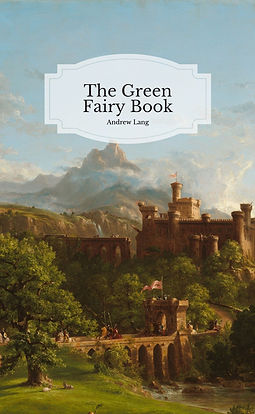
The Green Fairy Book is the third in the series and includes stories such as The Enchanted Ring, The Three Little Pigs, The Golden Mermaid and many more.
We would greatly appreciate if you could leave a review on Amazon for these books if you have purchased one. Thank you!